Gatherings, Potlucks and Long Tables: Eating Well Without Rules
Holidays and get-togethers bring abundant food and plenty of opinions about it. Here's a relaxed approach to enjoying the table while still paying attention to how you feel.
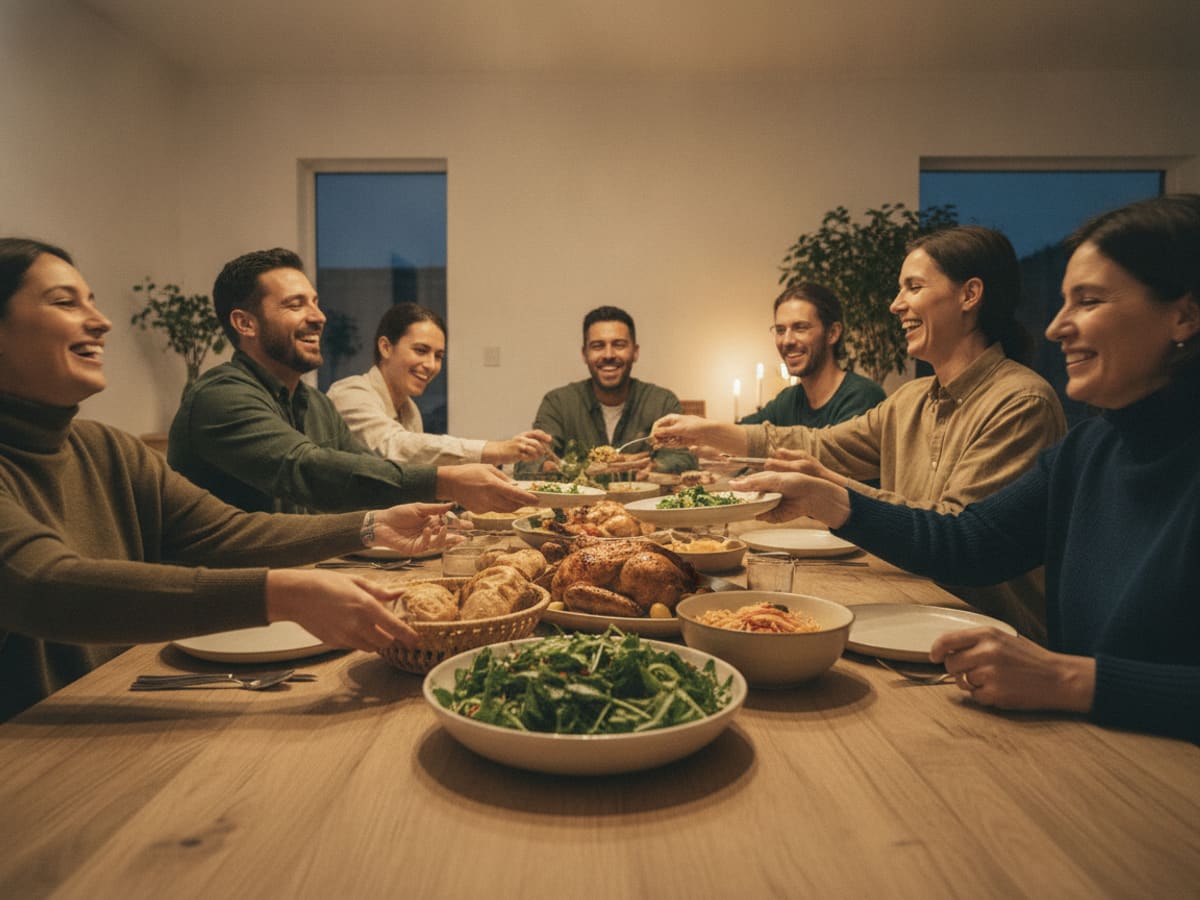
Big meals are about more than food. They're about people, traditions, and the pleasure of a crowded table. Yet many of us arrive with a quiet worry about what we'll eat and how we'll feel afterward. The good news is that you don't need a strict plan to enjoy a gathering. A few gentle habits can help you relax and be present.
Dropping the all-or-nothing mindset
It's easy to think of a big meal as either a day to be "good" or a day when everything goes out the window. Both ideas set you up for stress. One says you must hold back, and the other says you've already blown it.
Try a middle path. One meal, even a large and festive one, is just one meal in a long stretch of eating. Your overall habits matter far more than any single afternoon.
A few thoughts can help you let go of the pressure:
- Food is not a test, and you don't earn or lose your worth at the table.
- You can enjoy rich dishes and still care about how you feel.
- You don't need to skip earlier meals to "save room." Arriving very hungry often makes it harder to eat calmly.
Eating a normal breakfast or lunch beforehand is usually kinder to your mood and your appetite.
Looking over the table before you fill your plate
Before you grab a plate and start at the first dish, take a slow lap. Notice what's there. This small pause turns autopilot into a choice.
- Walk the whole table or buffet once without serving anything.
- Pick out the dishes you're most excited about, especially the ones you only get at gatherings like this.
- Start with those, and add familiar everyday foods around them if you'd like.
- Leave a little empty space on the plate. You can always go back.
You don't have to try everything. If a dish is something you could easily have any other day of the week, it's fine to pass. And if you're curious about something new, a small spoonful is plenty.
Including some vegetables, fruit, or other fresh dishes can add variety and texture to the plate. Think of it as building a meal you'll enjoy, not following a formula.
Eating at an easy pace and listening to fullness
Long tables invite conversation, and that's a gift. Talking naturally slows you down, so lean into it. Put your fork down between bites, take a sip of something, and listen to the person across from you.
Fullness tends to show up quietly. It's easier to notice when you're not rushing. Every so often, check in with yourself:
- Is the food still tasting as good as the first bites?
- Am I comfortable, or starting to feel heavy?
- Am I eating because I'm hungry, or because the dish is being passed?
There's no right answer, and you don't have to stop at a particular moment. The point is simply to stay in touch with your body instead of ignoring it. If you realize you've eaten a bit more than you'd planned, that's okay. Slow down, enjoy the company, and save the rest for later.
Dessert deserves the same approach. If you want some, have it and savor it. Eating a treat slowly and with attention is usually more satisfying than eating it quickly with guilt.
Staying hydrated between servings
At gatherings, it's easy to go hours without a glass of water, especially when the room is warm and everyone is chatting. Keeping a drink nearby gives your hands something to do and helps you feel more comfortable through the afternoon.
Some simple ways to make it easy:
- Fill a glass of water when you first arrive and keep it within reach.
- Take a few sips between servings or between conversations.
- If you're also enjoying other beverages, such as coffee, tea, or alcohol, have water alongside them.
Sipping between servings also gives you a natural pause, which makes it easier to notice whether you want more food or are simply enjoying the moment.
Going back to your normal routine the next day
The day after a big meal, the goal is simple: return to your usual rhythm. There's no need to make up for anything. Skipping meals, punishing workouts, or extra-strict eating the next day tend to feed the cycle of stress you were hoping to avoid.
Instead, think of it as picking up where you left off:
- Eat regular meals at your usual times.
- Drink water through the day.
- Go for a walk or do the movement you normally enjoy, because it feels good, not as payback.
- Get a good night's sleep if you can.
Leftovers can be part of your regular meals, too. Enjoy them without commentary.
If you notice yourself carrying guilt or worry about food well after the gathering, be gentle with yourself. Your next meal is a fresh start, and so is the one after that.
The next time you're invited to a potluck or a long table, remember that you're there to connect. Eat what you love, notice how you feel, and let the rest of the day belong to the people around you.